
The calculator was wrong about me by 225 calories a day.
I spent a day being measured properly: scanned on a smart bike, breathing into a mask, resting metabolism read rather than guessed at. Three things came back that a decade of perfectly sensible assumptions had missed completely. One of them I'd been getting wrong every single day for years.
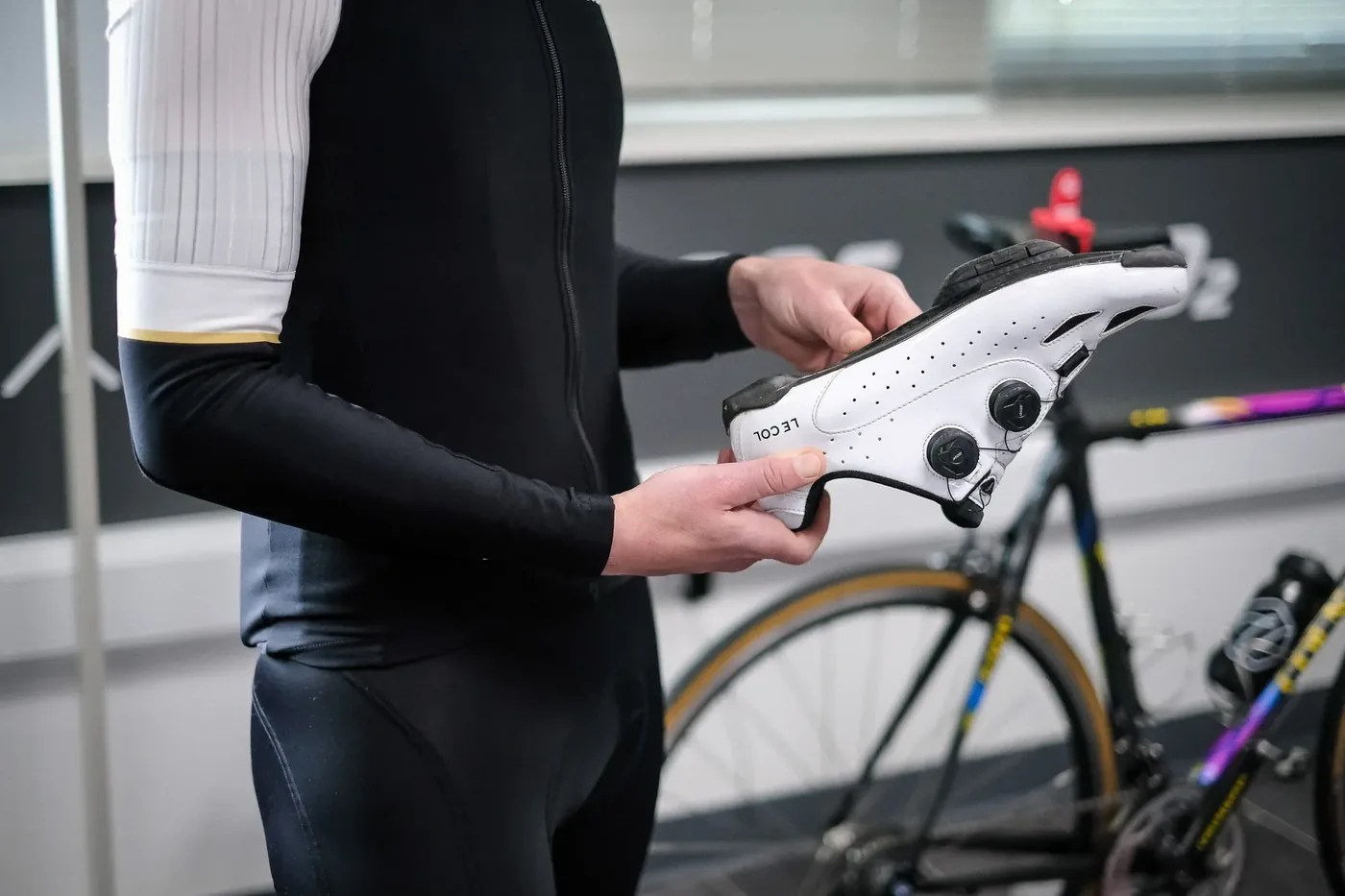
Every serious amateur is running on estimates, me very much included. Your training zones came out of a formula involving your age, which is a bit like sizing a bike by asking what year you were born. Your daily calories came from an online calculator that knows your height and your weight and precisely nothing else about you. And your position on the bike came from a shop fit, or worse, from squinting at a photo of a professional whose femurs are not your femurs.
None of that's stupid. Estimates are how you start, and honestly they're fine for a while. The trouble is that most of us never stop, and an estimate that's 11 per cent out just sits there compounding quietly for years while you wonder why you aren't getting any quicker.
So I booked a day at a physiology studio and had the lot tested. Vires Velo, with the sports scientist Hayden Daniells. I went in fairly confident. That was the first mistake.
1. My resting metabolism was 11 per cent higher than the internet thought
This one has changed my riding more than anything else, and it's easily the least glamorous thing on the list. Nobody has ever won the sprint for the village sign on the strength of their resting metabolic rate.
Resting metabolic rate is what your body burns doing absolutely nothing: keeping you alive and your brain working. Every calorie target you've ever set is stacked on top of that number, and almost nobody has actually measured theirs. They've used a calculator, which takes a population average, points it at one specific human being, and hopes.
The calculator reckoned I burned about 2,000 calories a day at rest. The measurement said 2,225.
+225 kcal
Measured resting metabolic rate versus the calculator estimate
2,225 against an estimated 2,000. An 11 per cent shortfall, every day, for years, and that's before you've turned a single pedal.
Two hundred and twenty five calories a day doesn't sound dramatic. It's a flapjack. But sit with it for a second, because it stacks up.
On the days I thought I was eating maintenance, I was quietly in a deficit. On the days I was deliberately running a small deficit to keep the weight where I wanted it, that deficit was a good deal bigger than the one I'd signed up for. So I'd been under-recovering, most days, for years, without ever once noticing I was doing it.
Under-fuelling is the most common mistake I see in amateur cyclists and it's almost never diagnosed as under-fuelling, because it turns up looking like something else. You get shelled in the last hour of a ride you used to finish fine. Sessions feel harder than the numbers say they've any right to. There's a cold in February you can't shake off, and motivation that's gone flat for no reason you can name. Every one of those gets blamed on fitness, or age, or work stress, and every one of those gets treated with more training, which is exactly the wrong medicine.
The most expensive assumption in amateur cycling is that you know how much you need to eat.
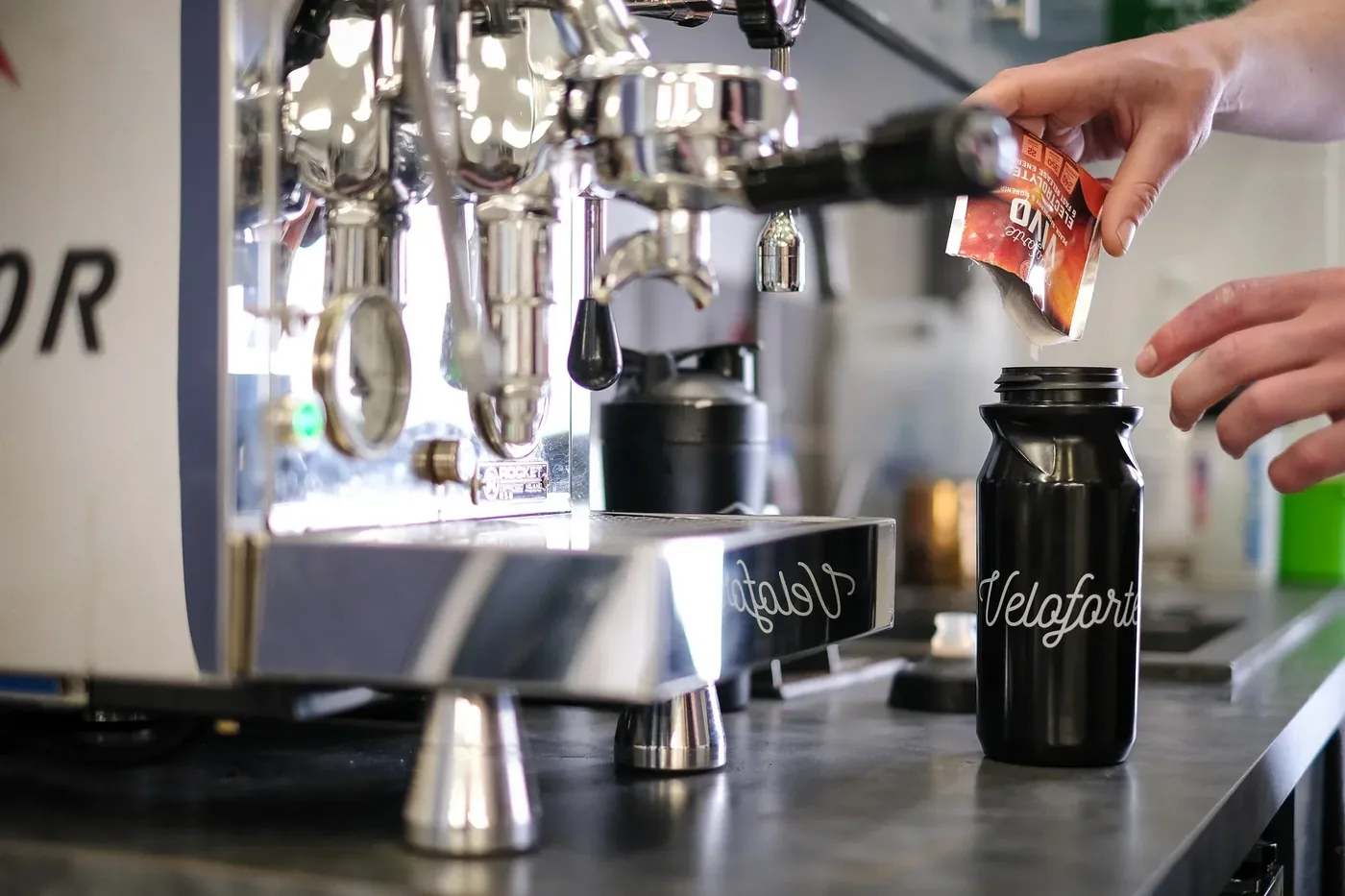
The test also came back with a macro breakdown, which turned a vague intention into an actual target. There's a big practical difference between "eat enough, mate" and a number you can check yourself against on a wet Wednesday in November.
2. My knee problem wasn't in my knee
The fit ran off a 3D body scanning system on a smart bike, so it measures what you actually do while you're pedalling rather than what you look like standing still in a shop, holding the hoods, trying to look like a pro.
Two things showed up. My right shoulder was sitting higher than my left, which I'd have sworn blind wasn't true, and my knees were tracking inwards through the stroke.
If you'd asked me the day before, I'd have described both of those as just how I ride. Asymmetry feels like character rather than a fault. And if you go looking online for a fix for inward knee tracking, you'll be told it's a mobility problem or a strength imbalance, which means months of faffing about on a mat in the spare room.
It turned out to be neither of those, just my pedal spindles. The standard length on the pedals I was running was holding my feet too close to the cranks for the hips I've got, so my knees were collapsing inwards to accommodate the geometry. Longer spindles moved my feet out and the tracking straightened. Ten years of spannering on my own bikes and it never once occurred to me to look at the bloody spindle.
The rest of the changes were tiny to the point of being funny. The saddle came down by one millimetre. The bars came in by a few. Medium arch insoles went into the shoes, and that was more or less it.
One millimetre. If a fitter had rung me up and told me my saddle was a millimetre too high, I'd have laughed at him. But a millimetre stops being funny somewhere around the hundred thousandth pedal revolution, and it stops being funny a lot faster than that when it's stacked with three other small corrections all pointing the same way. (I spent a decade at a team that got mercilessly ribbed for weighing the pillows. I'd love to tell you I took the lesson home with me at the time. I didn't. It took a bloke with a mask and a laptop, roughly ten years later, to make it land.)
3. My zones were guesses, and now they're not
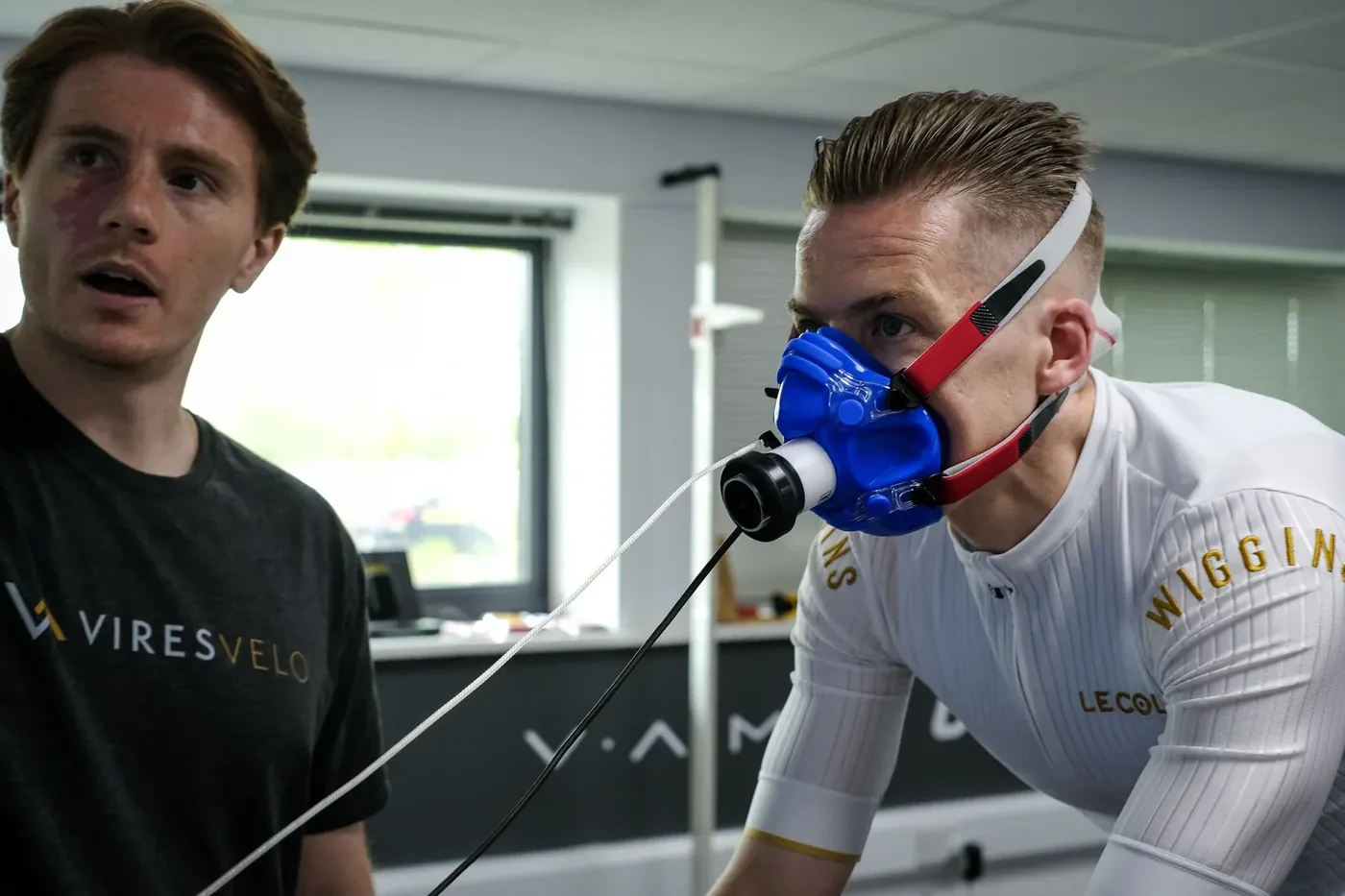
The VO2 max test is the one everybody pictures when they think of a physiology lab. Mask on, ramp protocol, the power going up every minute, and a very calm sports scientist watching you slowly discover exactly where your limit is, which is not the most dignified twenty minutes of anyone's life.
The headline number is the bit you mention at the cafe stop, obviously. The genuinely useful part is what comes with it: training zones built from my actual physiology instead of a percentage of some field test I did on a windy Tuesday, or worse, a formula that mostly cares how old I am.
It matters most at the easy end, which is the opposite of what people expect. If your endurance zone is set slightly too high, and I'd bet most people's are, then every long ride you do is a bit too hard. Not hard enough to count as a quality session, just hard enough to cost you recovery and take the edge off tomorrow's intervals. Do that for a few years and you end up as a rider who trains constantly and improves slowly, which describes an awful lot of committed amateurs, and described me for longer than I'd like.
What the day actually taught me
Not one of the three findings was about being unfit. Every one of them was about being wrong.
Wrong about my metabolism by 11 per cent. Wrong about the cause of the knee thing, because I'd diagnosed it as a body problem when it was a bit of hardware sitting directly under my foot. And wrong about how hard my easy rides were, which is the error that costs you the most and shows up the least.
Which is more or less the case for measurement. Nobody ever got fitter breathing into a mask, but you do come away knowing which of the things you believe are true and which ones you've been carrying about for years because nobody ever thought to check them.
The awkward part is the cost. A day in a physiology studio isn't something most riders are going to do every year, and I'm not going to sit here pretending it's a routine purchase. So what do you do if you can't buy the lab?
You do the cheap version of the same discipline. You stop trusting any estimate that's never been checked, which is most of them. You go looking for the finding rather than the reassurance, and those two are not the same thing, whatever the internet tells you at two in the morning. When something isn't working, you go after the mechanism instead of throwing more effort at the same broken assumption. And you treat your own data as evidence rather than decoration, because you're sitting on far more of it than my grandfather ever had, and he managed all right.
The pros have better information about their bodies than we have about ours, plus somebody whose actual job it is to notice when that information changes. The bodies themselves aren't as different as you'd think. Turns out that's what the pillows were about.
The speed was hiding inside the things I was most certain about.
Why this is here
Forma is the somebody whose job it is to notice. It reads your rides against the conditions, spots the fade before you name it, and tells you when the problem is your fuelling rather than your fitness. One hundred founding riders, then the doors close.