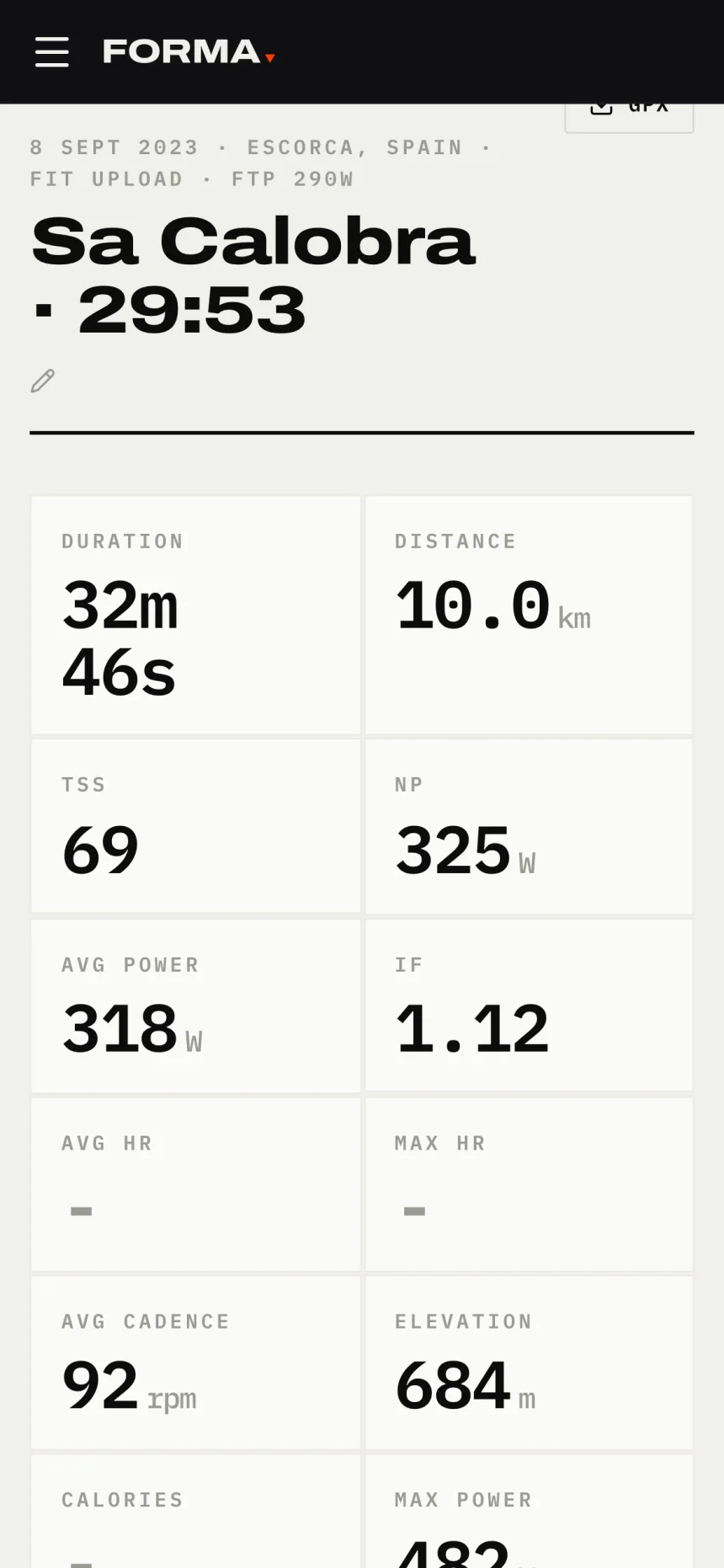
Three attempts at Sa Calobra. Two failures. Seven seconds.
The first attempt ended at six kilometres with my seatpost pointing somewhere it had no business pointing. The second was 30:47, and it sat on me for days. The third was 29:53, and honestly, none of the difference came from being fitter.
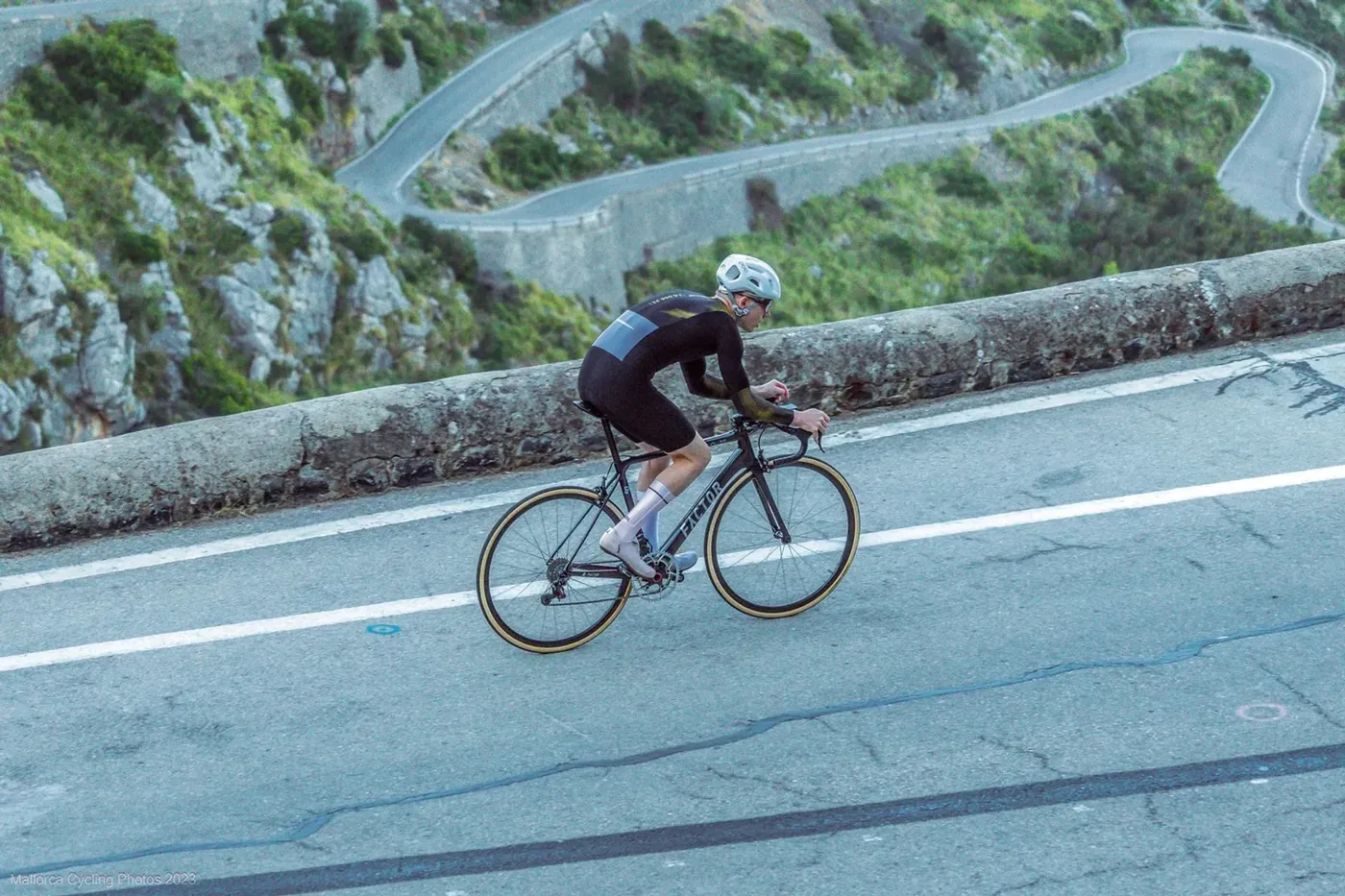
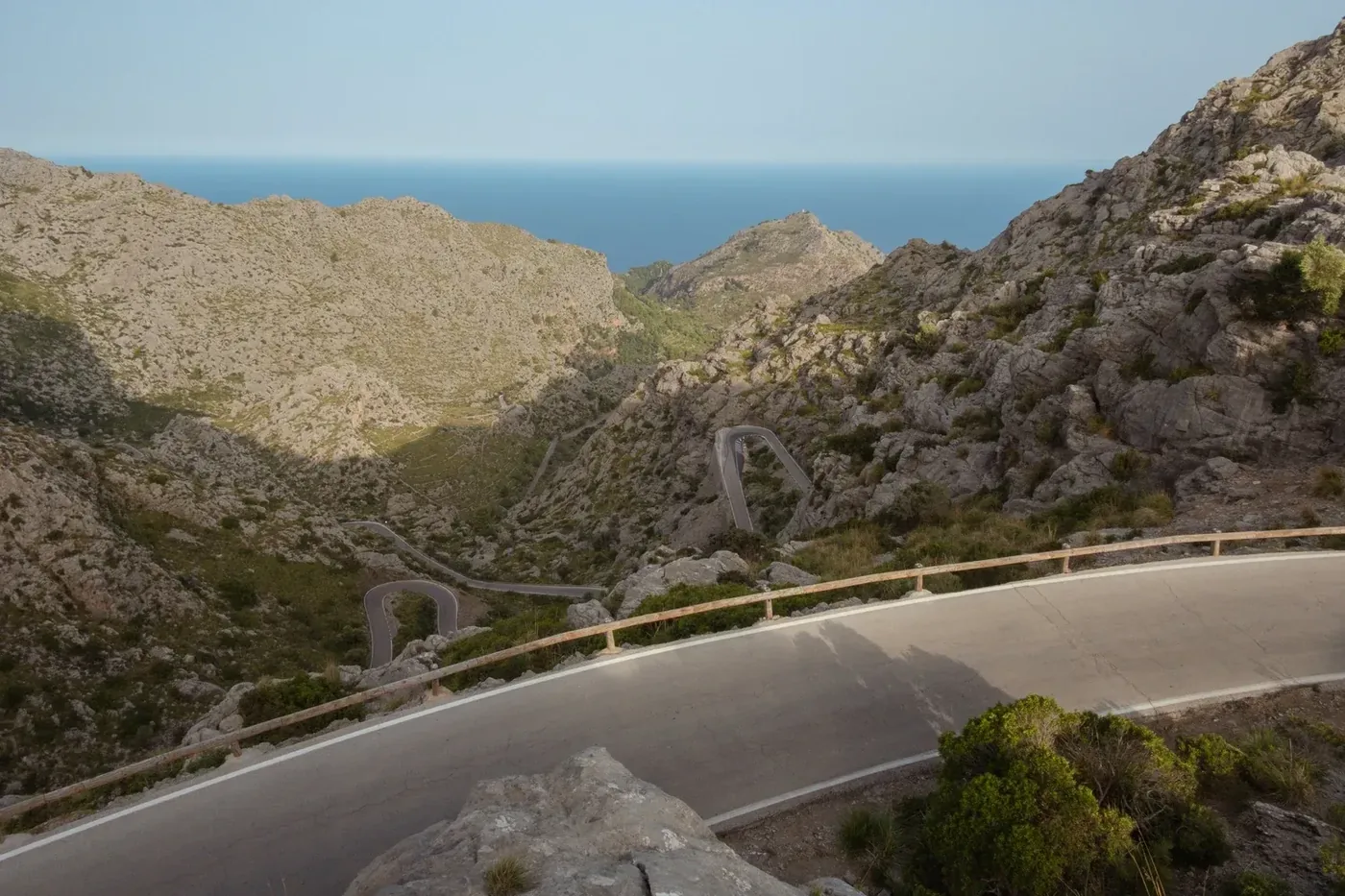
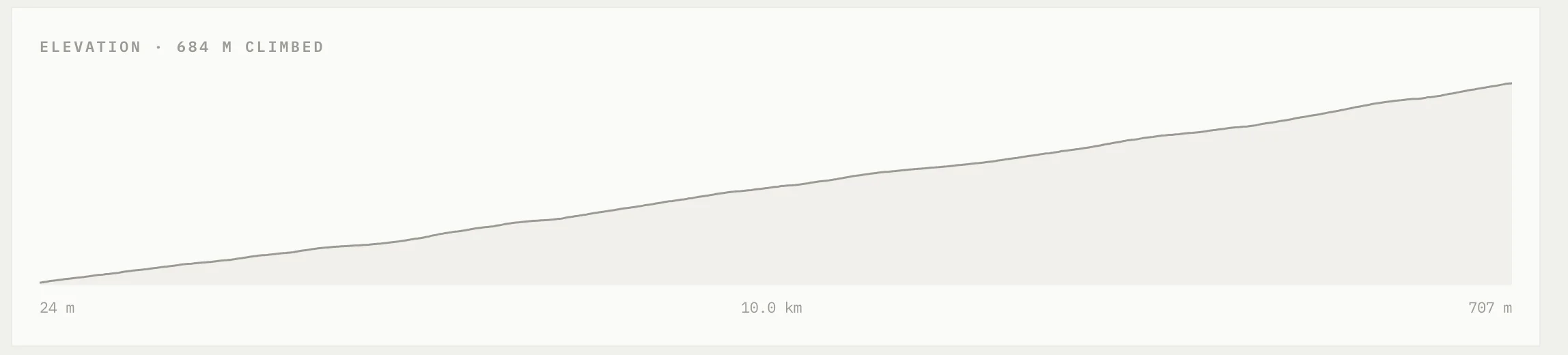
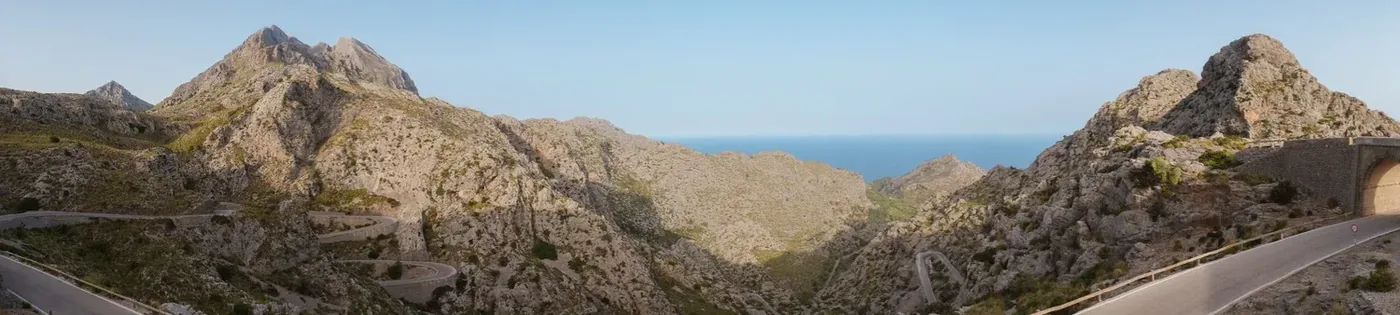
Sa Calobra is 9.44 kilometres long, climbs 659 metres and averages seven per cent. It's the most photographed road in Mallorca and it has no interest whatsoever in how your winter went. Tom Pidcock has been up it in 22:46, which is a handy number to keep somewhere near the front of your head for the exact moment you start congratulating yourself.
I wanted thirty minutes. Thirty means nothing physiologically, but it's a round number, and a round number is the sort of thing a bloke with a job and a kid can hold onto through a British winter. A goal doesn't have to be rational, so long as it pulls you out of the door in February.
Monday: the DNF
Six kilometres in, going quite well actually, and my seatpost twisted to the right.
Torqued to six newton metres, carbon grip paste applied, both done properly, by me, the night before. (I do love a torque wrench. There's something about that little click that makes you feel like a team mechanic instead of a bloke kneeling on his own kitchen floor at eleven at night in his socks.) It moved anyway. Once your saddle's pointing at the Mediterranean rather than the road you're done, so I turned round and rolled back down, which wasn't the morning I'd planned.
The temptation on a day like that is to call it sod's law and file nothing. Mechanicals feel like bad luck. They happen to you, there's no lesson in them, next. Which is almost true, and the bit that isn't true turns out to matter quite a lot. That seatpost moved because I'd simply never tested the setup under half an hour of out-of-the-saddle load on a seven per cent gradient. What I'd tested was a stationary bike on a kitchen floor, with a torque wrench and a nice warm feeling of competence.
You haven't tested a thing until you've tested it in the conditions you actually plan to use it in.
Tuesday: 30:47, and the forty-seven seconds that wouldn't go away
The next attempt was the one that actually hurt, because there was nobody to blame for it. Execution failures come with your name on them.
Thirty minutes and forty-seven seconds, so forty-seven seconds off. I'd gone out to hold 340 watts and I averaged 325.
30:47
Second attempt · 325W average against a 340W target
Forty-seven seconds outside the goal, which felt at the time like a fitness problem. It wasn't, quite.
That evening I didn't go for a consoling beer and decide I needed a bigger engine. I opened the file. It takes about ten minutes and it's the most useful habit in this whole story.
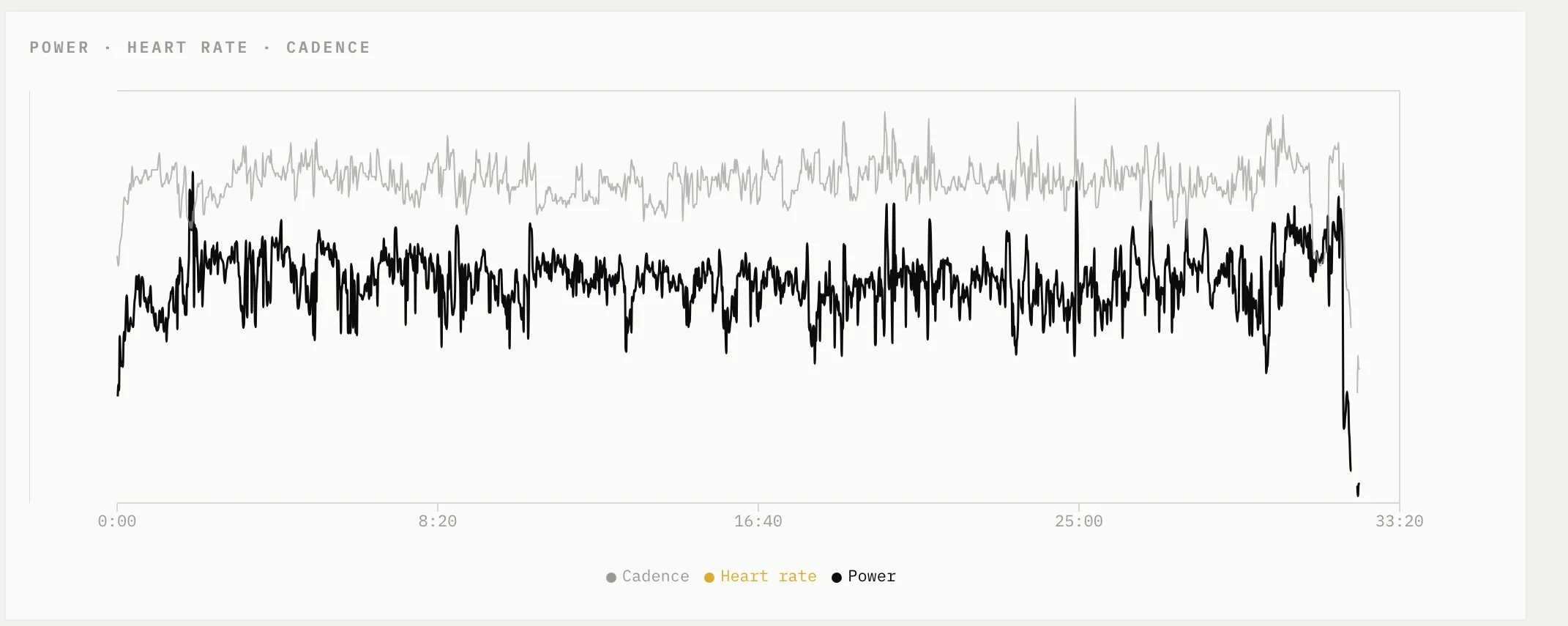
The power trace told a story I hadn't felt at all while I was riding it. It looked like a bread knife. Dozens of small collapses in it, and every single one of them a gear change. Sa Calobra has 26 bends, the gradient never settles, and I'd been chasing it the whole bloody way, shifting to hold a comfortable cadence through every ramp and every easing off.
Each shift cost me a fraction of a second of load. Invisible on its own. Over half an hour of climbing they added up to most of my deficit. Most of it, anyway. I've never sat down and worked out the exact share and I'm not sure I want to.
Which is the annoying thing about a plateau. You go looking for the one big fault and find a hundred small losses instead, and you don't spot any of them until you actually sit down and read the file properly.
What actually changed
Between Tuesday and Friday I needed fifty-four seconds. Nobody gets fitter in three days and I certainly didn't, so the time had to come out of somewhere else.
One: I stopped chasing cadence
I'm a 95rpm rider by instinct and I'd been defending that number like it was a moral position. On a climb that changes pitch every two hundred metres, defending a cadence means shifting constantly, and shifting constantly means unloading the pedals constantly.
So I gave it up. On the steep bits I let the cadence drop to 75 or 85 and pushed the bigger gear instead of reaching for a smaller one, and across the climb as a whole I let it wander anywhere from 75 to 105 and just stopped interfering. Fewer shifts, and therefore fewer little holes in the power.
The gearing is what made that possible. 52x36 up front, 12x29 at the back. Nothing exotic, mind you, but enough range to get through the steep sections without needing a new gear every time the road changes its mind.
Two: I stopped pacing on feel
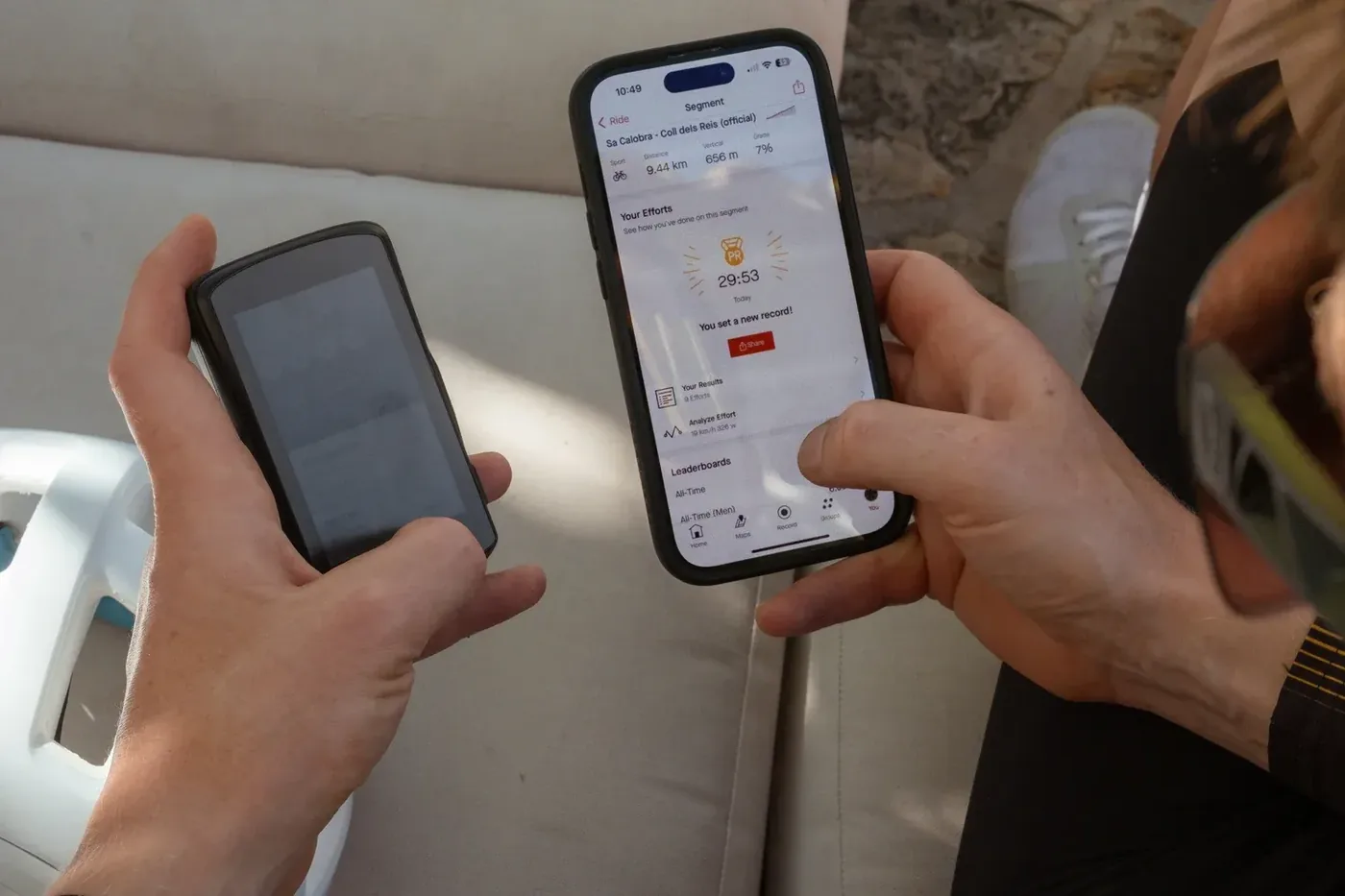
The trouble with pacing a thirty-minute climb on feel is that feel is a liar for the first five minutes and a coward for the last five. So I stopped asking myself and used live segment pacing instead, which meant I could see where I actually stood against the target rather than against my own opinion of how hard it was.
At six kilometres, the same spot where the seatpost had ended everything on Monday, I was sixty seconds up. That number did two things at once. It told me the plan was working, and it gave me permission to empty out whatever was left.
Three: I bothered with the free stuff
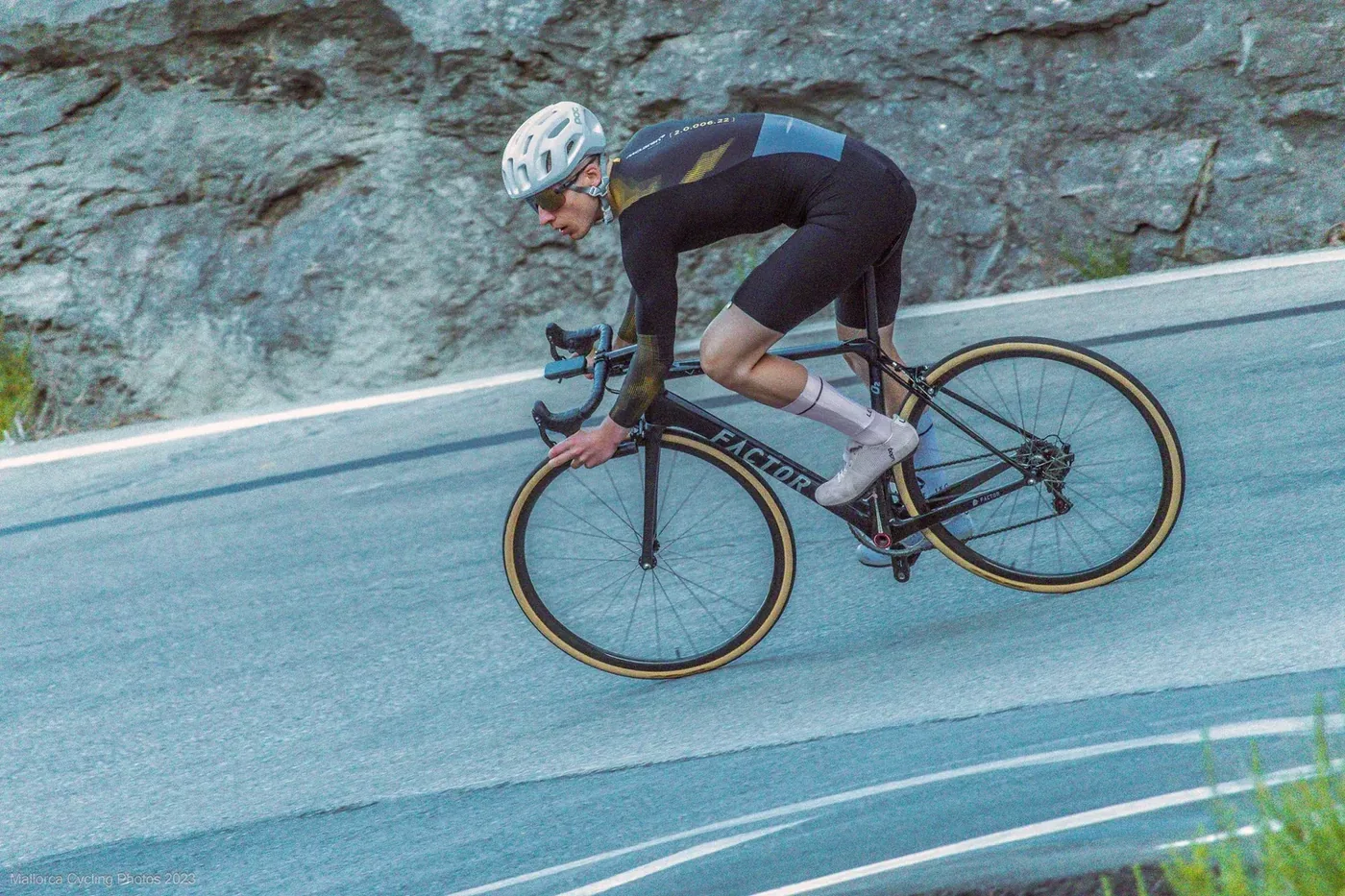
The bike was 7kg, the helmet 245 grams, the glasses 23 grams, and there was an extra caffeine gel, 75mg, taken when it would actually do something rather than swallowed at the bottom out of habit because that's when you always take a gel. None of it is thrilling, I know.
None of it won me fifty-four seconds either. Together it probably bought me a handful, and when you come in seven seconds inside a target, a handful of seconds is the difference between a story and a shrug.
29:53
Third attempt · 400W over the final section
Seven seconds inside the target. Started at 3.30am on almost no sleep, which I'm not recommending to anybody.
The part I'm not proud of
I started that ride at half past three in the morning having barely slept, because it was the only window I had.
Every recovery principle I'd coach anyone else on says don't do that. Sleep comes before everything else, obviously, and riding a maximal effort on a wrecked night is a reliable way to produce a disappointing number and then a fairly grim week behind it.
I did it anyway and it worked, and I want to be careful with the lesson, because "ignore the rules and send it" is a rubbish lesson. The honest version is narrower. A whole season of doing it properly buys you roughly one exception, and you can spend it on the day that counts. What you can't do is live there. Riders who make a habit of overriding their own bodies get knackered, then ill, and then they quietly stop bothering, which is no way to get faster.
It was one night, and I'm not turning it into a philosophy.
What the two failures were actually for
This is the bit that changed how I ride, and it's the reason I'm writing any of this down instead of just posting the time and letting you assume I'm brilliant.
The DNF taught me to test things in the conditions I intend to use them in. The 30:47 told me the deficit was in my shifting and not in my legs. Neither of those was available from the ride that went well. The 29:53 taught me nothing whatsoever. Success rarely does. All it tells you is that whatever you did last time was good enough, which is a lovely feeling and no use to anybody on a Tuesday in January.
The failures did all the coaching. The 29:53 was just the bit you put on Strava.
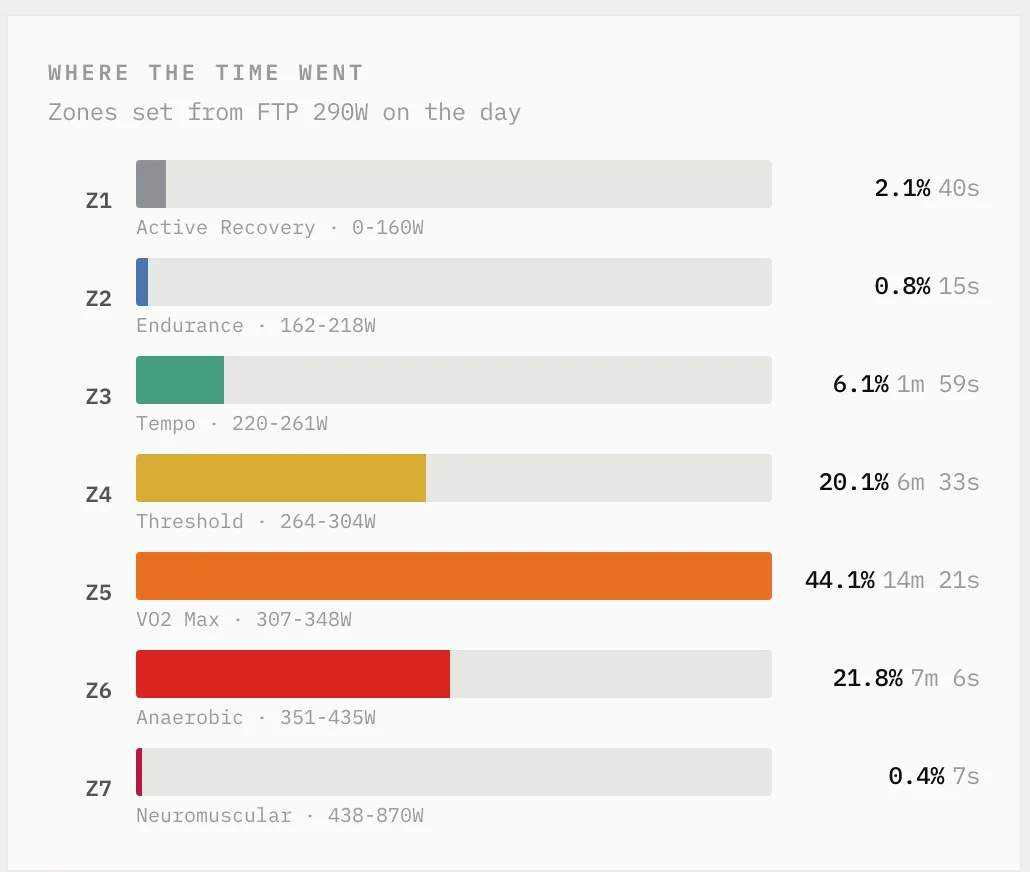
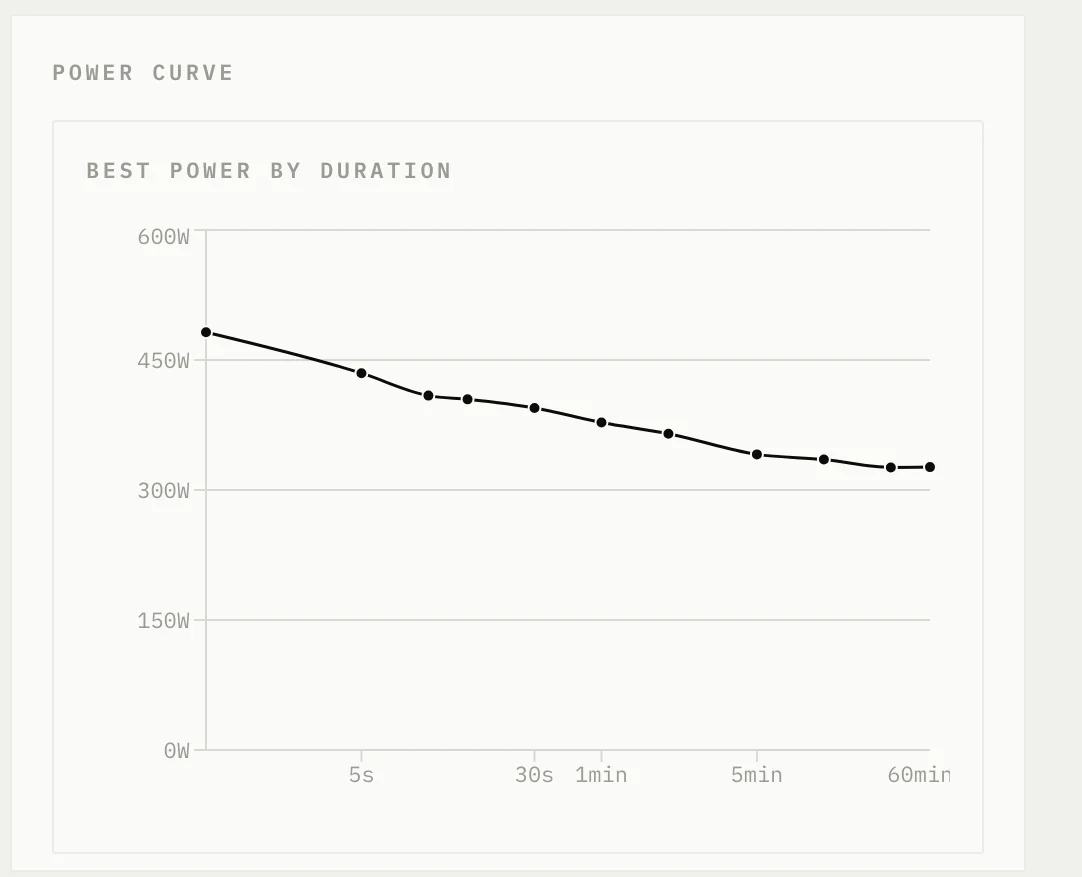
Most amateur riders, and that includes the version of me who existed before Team Sky, treat a bad day as a verdict on themselves. The number was disappointing, therefore I'm disappointing, therefore the answer is to try harder next time. Harden up. Rule 5. Trying harder is exactly what I did on Tuesday, and it produced 325 watts and a power file with teeth in it.
The professional response is much duller and works far better. You treat the bad result as data. Open the file, work out what actually went wrong, change that one thing, and go again. The target stays where it is. You just take a different way round to it.
I've watched world tour teams do this at enormous expense, in a room full of people, with somebody eventually saying the words marginal gains out loud and nobody laughing. All the method actually needs is somebody to look at your data with an honest eye, know what they're looking at, and then tell you the truth about it, which is the hard part. The room is optional.
That's a coach. Most of us haven't got one. Most of us have got a torque wrench, a kitchen floor, and a nagging suspicion that there's a minute in there somewhere.
Why this is here
Forma is the coach that reads the file for you. It debriefs your ride against the conditions instead of calling a headwind a bad day, remembers what you learned last time, and holds your goal steady while the plan bends around your life. One hundred founding riders, then the doors close.