
524 hours indoors.
Five hundred and twenty four hours in a spare room, staring at a screen. It's the least romantic training I've ever done and probably the most useful, because when you've got a job and a life, the indoor hour is the one you can actually defend. Here's the system that makes it count.
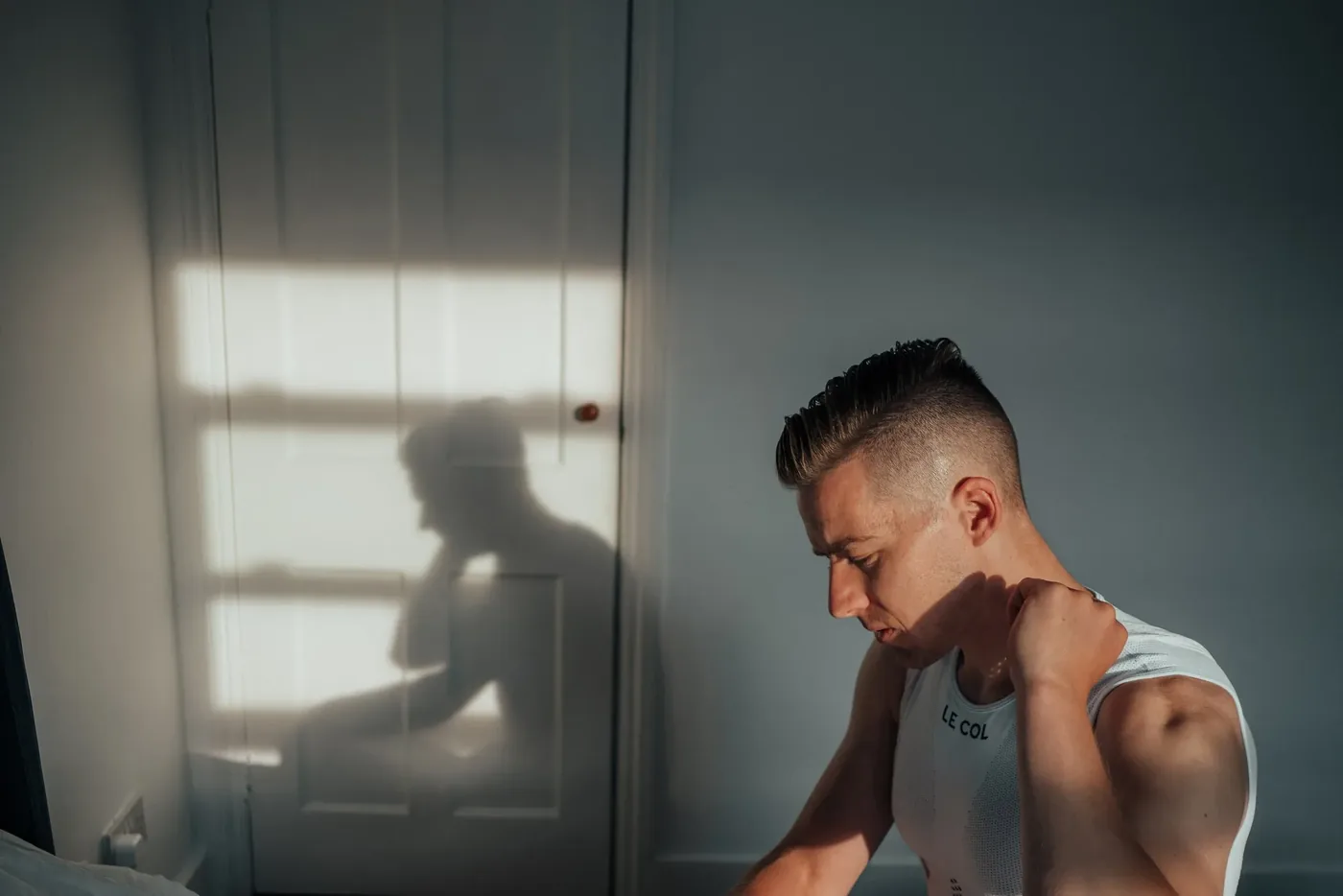
Nobody dreams about the turbo. We dream about the Col du Tourmalet in good weather, with fresh legs and nowhere to be afterwards. Then Tuesday arrives, it's dark at half past four, someone small needs collecting, and the only training on offer is sixty minutes in a room that smells increasingly of you.
If you're short of time, that hour matters more than anything else in your week. It's weatherproof and there isn't a traffic light in it, and every watt you put through the pedals is deliberate, which is probably why an hour indoors is worth close to ninety outside in training terms. None of it gets spent coasting or waiting at junctions.
So how do you get an hour past your own reluctance? Five hundred and twenty four hours in, this is what I've got.
1. Win the session before you clip in
Almost every turbo session I've abandoned was lost in the ten minutes before it started, not in the interval that supposedly broke me.
You get thirsty and the bottle's downstairs. The fan's pointing at your left knee, so you're slowly cooking. And sod's law, the towel's in the wash, so the sweat's running into your eyes. Every one of those is a small, perfectly legitimate reason to stop, and every one turns up at the exact moment your legs were looking for an excuse.
Which is why I treat the setup as part of the session. Bottles filled. Power meter calibrated. Towel on the bars. Fan positioned and pointed at your chest and face rather than your legs. Headphones on. Workout loaded before you get on, so the first decision of the hour isn't what to do. (The fan, honestly, is the best value upgrade in cycling and nobody talks about it. We'll come back to the fan.)
The other half of it is structure. Free riding indoors is how you end up doing forty five minutes of aimless tempo, which is about the least productive intensity in cycling, too hard to recover from and too easy to do you any good. Load a session that has a shape to it and let the shape make the decisions for you.
Almost every turbo session I've abandoned was lost in the ten minutes before it started.
2. Fuel it like any other session
The mistake I see most often in amateur riders, and I made it for years myself, is treating the indoor hour as though it doesn't need feeding. It's short, it's in the house, so it doesn't count.
It counts, because a hard hour indoors is a hard hour.
Before anything with intensity in it, I want at least 40 grams of carbohydrate on board per hour of work. That can be a proper bar built for the job, or sourdough toast with nut butter and a banana. It doesn't have to be clever, just there.
Afterwards, get something in within about thirty minutes. My default is poached eggs and avocado on sourdough, which comes out around 28 grams of protein and 69 grams of carbohydrate, or a recovery shake at roughly three parts carbohydrate to one part protein if I've got to be somewhere.
The bit worth holding on to, and it applies to a lot more than the turbo, is that the meal afterwards is where the adaptation actually gets built, which is easy to miss if you've filed it under reward for suffering. Skip it and you've done all the work, then quietly thrown the result away. I did exactly that for most of one winter, which was not the winter I'd planned.
3. Wear the good bibs. Yes, indoors.
I know how this one sounds. It still costs people entire training blocks.
Outdoors you move about. You stand on the climbs, you shuffle around on the saddle, you freewheel down the other side. On a turbo you're stuck in one position for the whole hour, so all of that pressure lands on precisely one patch of tissue. Add a chamois that's past its best and has lost the density that made it work, and you've built yourself a problem.
So wear your good bibs on the turbo, not your oldest ones. Something light and genuinely moisture-wicking, rather than the winter pair you're trying to get the last few rides out of. If the session runs past two hours, think about a fresh pair at halfway. I might be wrong about that one, plenty of sensible people think it's overkill, but I've never once regretted it. Yes, it's a faff. It's a much smaller faff than the alternative.
4. Take the hygiene seriously, because saddle sores end blocks
Indoor sweat behaves differently. There's no wind to take it away, so it soaks in and sits there, and it's salty. Salt and pressure and friction together make a fairly effective cutting compound, applied to the one part of you that can least afford it.
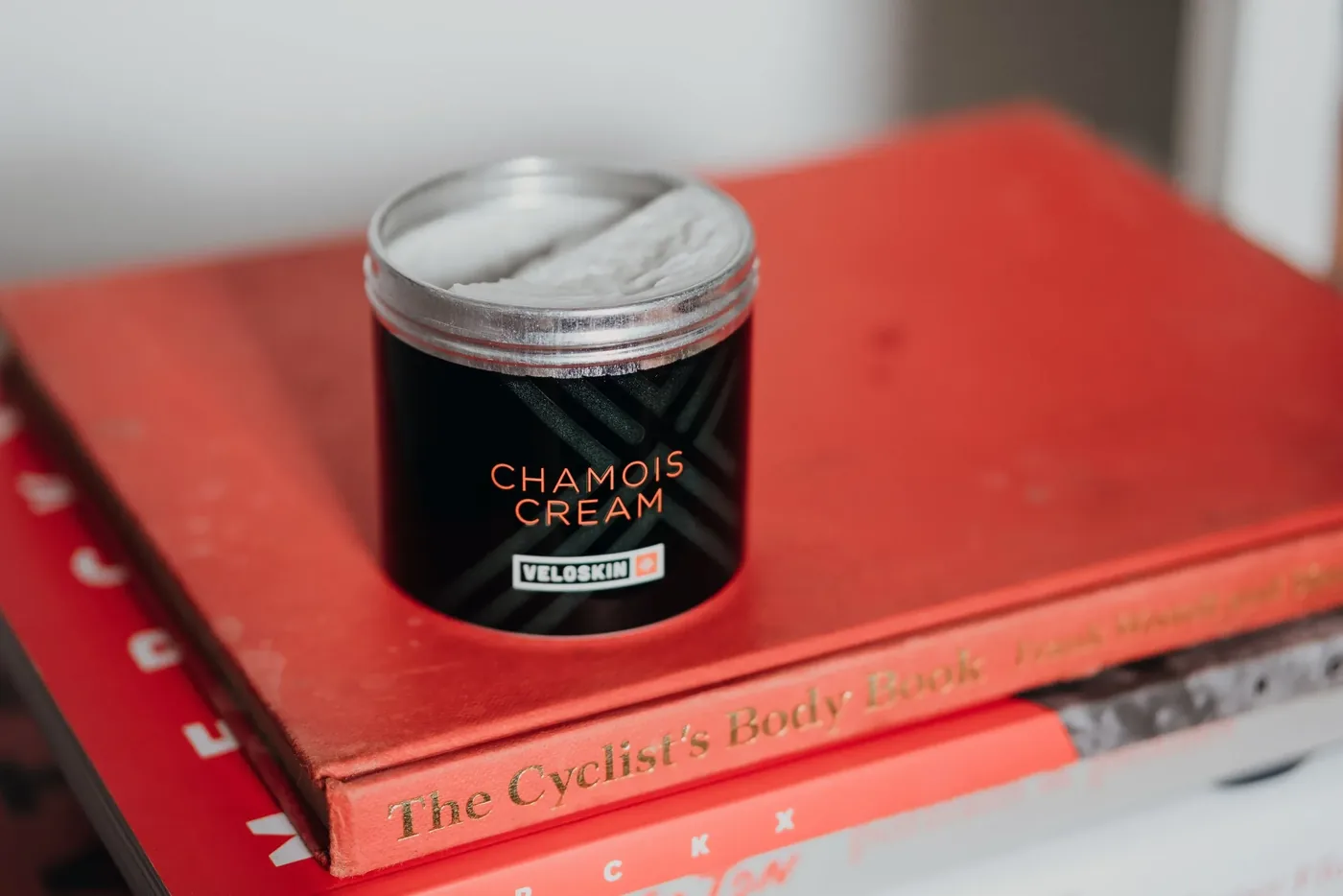
Far more seasons get quietly ruined by three weeks off with a saddle sore somebody stubbornly trained through than by any dramatic crash, and a saddle sore is a bloody stupid way to lose three weeks. The prevention is dull and it works: a chamois cream that cuts friction and carries an antibacterial, a bike fit that isn't loading the wrong tissue in the first place, and getting out of wet kit the second you unclip, rather than standing about in the kitchen making coffee in it, which I still do, and which is entirely my own fault.
A ruined chamois is fifteen minutes of laundry. A ruined block is a month.
5. Learn what your head does at minute forty
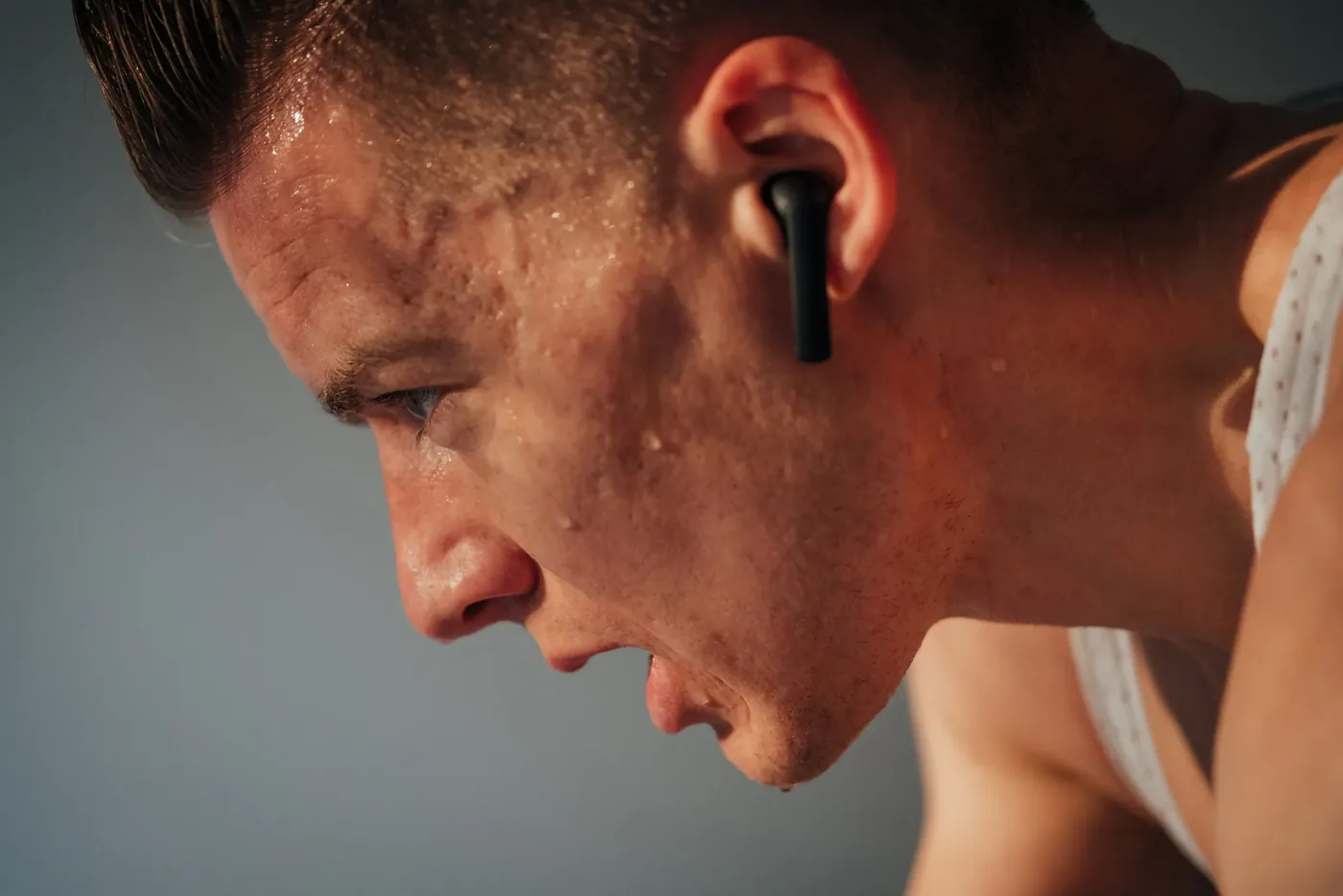
The physical side of indoor training is the easy bit. The hard bit is that there's nowhere to go and nothing to look at, so you're stuck in the pain cave with the commentary in your own skull for a full hour, and it does like to talk.
That commentary has a script, and it's remarkably consistent. It turns up at the same point every time, usually the third interval, and it's very reasonable about the whole thing. You've had a long day. You've done enough, really. You'll do the full session on Thursday when you're fresher.
The most useful thing I ever did was write mine down. Verbatim, excuses and all. An argument that sounds like hard-won wisdom at minute forty looks like absolute nonsense the next morning, in biro, on a bit of paper. Once you've read your own script back, you spot it starting, and spotting it is most of the job.
The other half is knowing what you're actually agreeing to, because the honest arithmetic of a hard session is a lot smaller than it feels.
10 of 75
Minutes in a threshold session that are genuinely uncomfortable
Of those, maybe two to four properly hurt. The rest is warm-up, recovery valleys and waiting.
Quitting gets easier with practice, sadly, in the same way everything else does. Every time you stop early you make stopping early a bit easier next time. The good news is it works the other way round too, which is why it's worth finishing the sessions that don't much matter on their own.
Give yourself something measurable to aim at, a percentage on your FTP by spring, or a duration you can hold in April that you can't hold tonight. Only a number survives minute forty.
What 524 hours actually taught me
That consistency is mostly an engineering problem. I spent years assuming the riders who never missed a session were simply built differently to me, which was rubbish, and also quite convenient.
Every one of the five things above removes a reason to fail before you get the chance to use it. Bottle filled, so you can't get off for a drink. Fan aimed properly, so you don't cook (told you we'd come back to the fan). Good chamois, so nothing hurts that shouldn't. Food ready, so the hour is fuelled. Script known, so you clock the excuse the moment it turns up.
None of that takes much discipline, which is lucky, because discipline is in short supply at half past six on a Tuesday. It's all just design, and design is available to anyone, including the knackered and the ones who don't much fancy it tonight, which over a winter is all of us.
Five hundred and twenty four hours in a spare room, and not one cafe stop out of any of them. I'm on it again tonight, mind.
Design beats discipline. Discipline runs out somewhere around minute forty. The setup you did at half past six doesn't.
Why this is here
Forma is built for the rider whose training happens in the hours they can actually protect. It plans inside your real week, talks you through the intervals in your ear, and when the week collapses the plan bends instead of shaming you. One hundred founding riders, then the doors close.