
I haven't cleaned a chain in 10 years.
Not once. In that time I've ridden 360 kilometres through British rain, taken a course record, and gone under thirty minutes on Sa Calobra. The chain is the one place on the bike where the free speed is measurable and repeatable, and almost nobody bothers to pick it up.
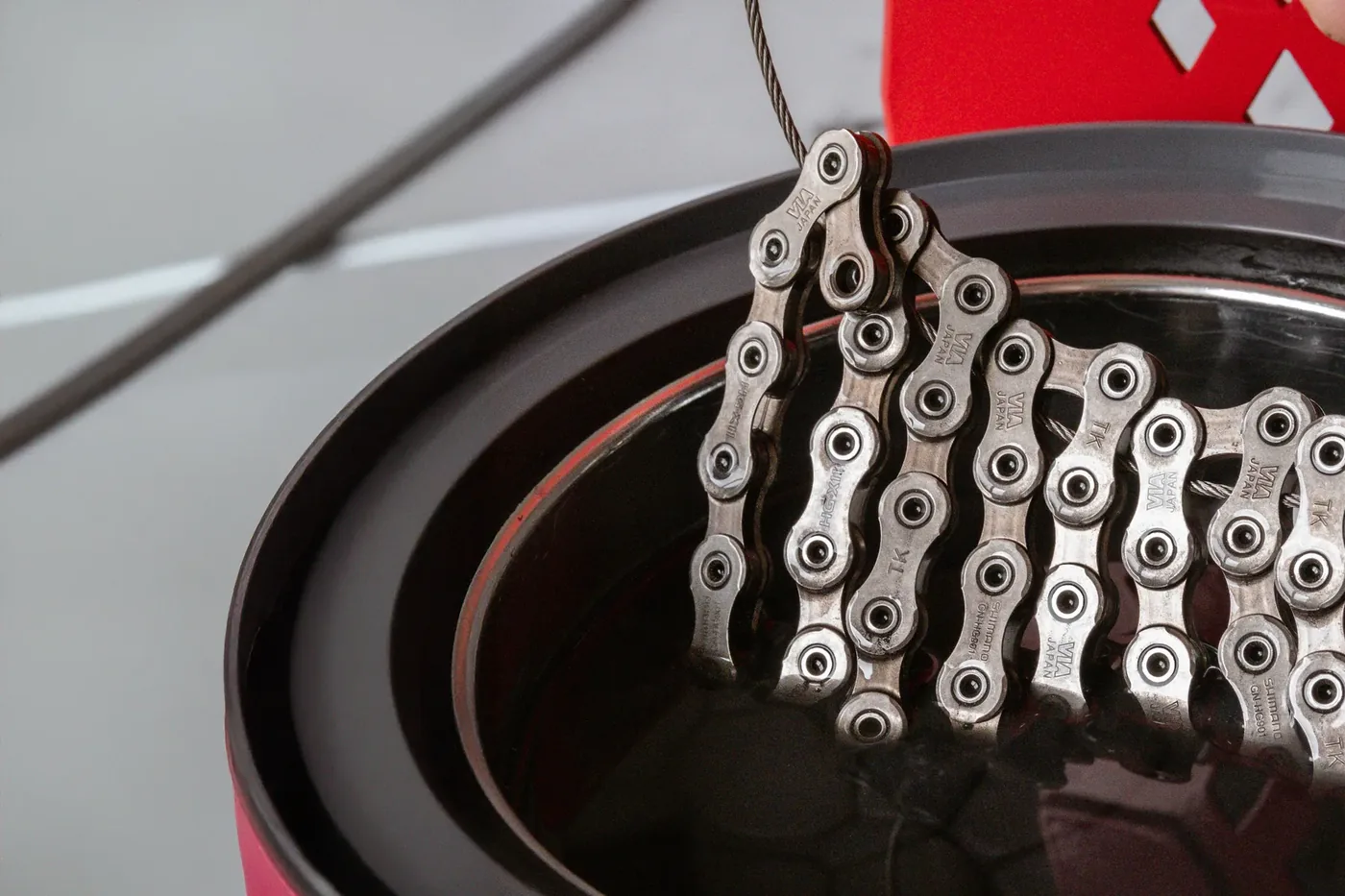
Your drivetrain is the one system on the bike where you can buy a genuine, laboratory-verified improvement for less than the price of a decent pair of bib shorts. Most riders still degrease, re-oil, and hand the difference straight back every single ride. That's the bit that annoys people when you say it out loud.
I stopped oiling chains a decade ago. What follows is why, with the numbers that convinced me, and the honest reasons you might still decide it isn't worth your Sunday evening.
The number that starts the argument
Zero Friction Cycling in Adelaide run the most bloody-minded drivetrain testing in the sport. They measure chains on a rig, then contaminate them with a standardised grit slurry and just keep measuring, out to 6,000 kilometres of simulated filth. That second part is the bit that matters, because a chain in a laboratory isn't a chain on a Sussex lane in February.
3.8W
Hot melt wax, friction loss at 250W
Against 4.5W to 7W for standard oil-based lubricants, depending on which one you've bought. Source: Zero Friction Cycling.
Call it three watts on a good day against a mediocre oil. Which sounds like nothing, and honestly, on its own, it is nothing. That's rather the point of marginal gains. Nobody ever won anything with one of them, and nobody serious hands one back either.
Put three watts against a real effort, though. Sa Calobra is 9.4 kilometres at seven per cent. Hold 300 watts up it and three watts of recovered drivetrain loss is worth roughly eighteen seconds. I went 29:53 on that climb. Read that number again, then tell me eighteen seconds isn't worth a pot of wax.
The number that ends it
Friction gets the headline, but the number that quietly saves you the most money is wear.
5 to 10×
Lower drivetrain wear on wax versus oil
Cassettes and chainrings, measured across Zero Friction Cycling's contamination testing, 2023 to 2025.
An oiled chain is a fly trap. The oil sits wet on the surface, collects the grit thrown up by every wet road, and then that grit gets dragged through the rollers a hundred times a minute. You're lapping your own transmission with a fine abrasive paste, which is not exactly ideal. Wax doesn't do that, because wax is dry. Grit lands on it and falls off, or sits there inert on a hard surface instead of suspending itself in a lubricant.
The consequence shows up fastest in the wet. Friction Facts, reported through VeloNews, found waxed chains running close to six watts faster than oiled ones after just one hour in contaminated conditions. Not day one in a clean lab. One hour of exactly the riding most of us do all winter.
Oil looks quick enough in the shop. An hour into the rain, which is where most of us actually do our riding, it isn't.
What it actually costs
Right, this is where I have to be straight with you, because the entry fee isn't trivial and the internet is quite full of people pretending it is.
| Item | Cost | What it does |
|---|---|---|
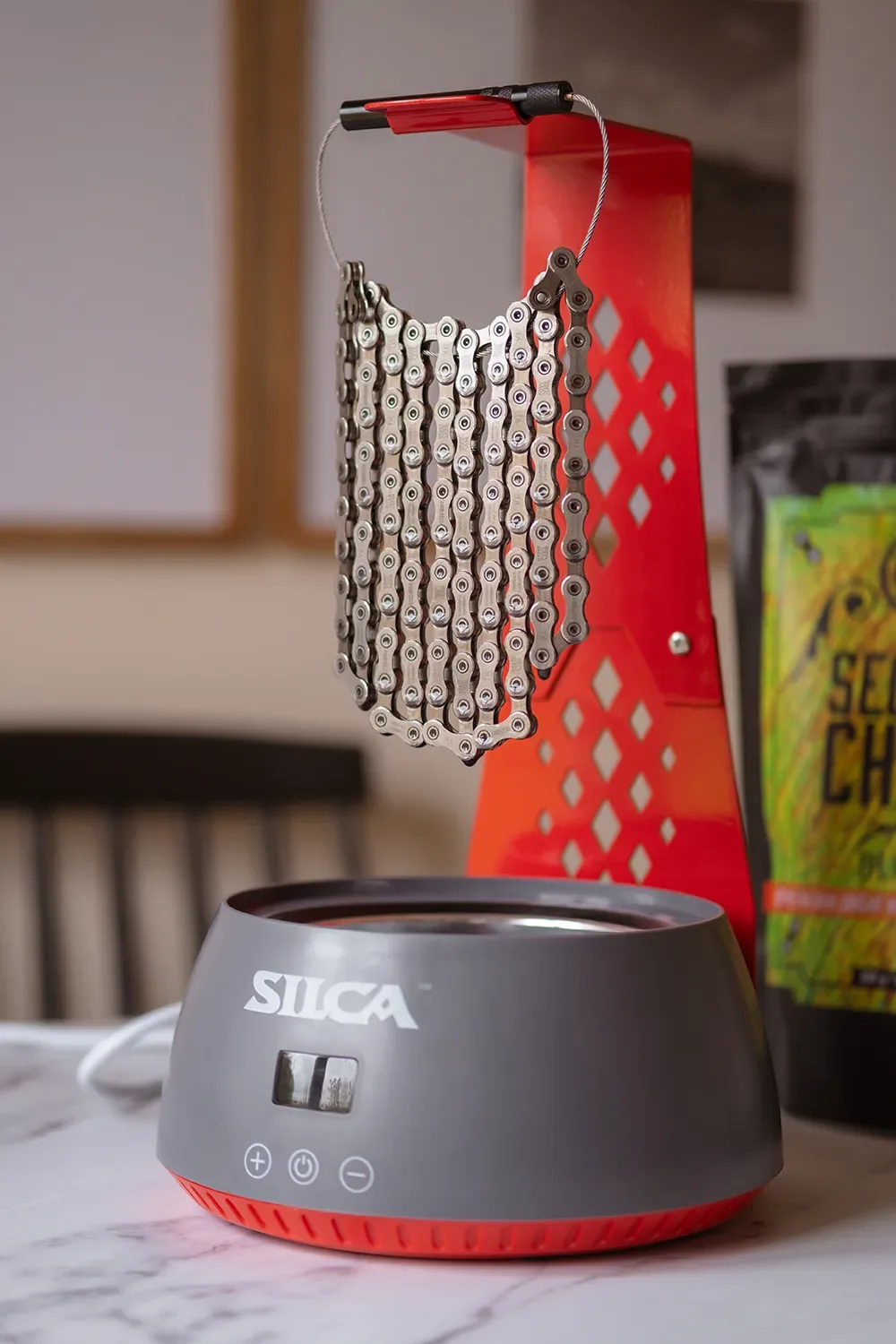
| Waxing system (pot) | £100 | Temperature-controlled bath, holds 125°C |
| Secret Chain Blend, 500g | £40 | The hot melt wax itself, with tungsten disulfide |
| Super Secret Drip | £25 | Top-ups between full dips |
| StripChip, 6 chains | £24 | Removes factory grease without solvents |
| Setup total | £189 | One time |
One hundred and eighty nine quid to start. That's a real number and I'm not going to dress it up.
Then the running cost. A dip uses 30 to 50 pence of wax. A drip top-up is 60 pence to a pound. Amortise the kit over a couple of seasons and you're adding something like 70 pence a session. Call it one to two pounds per service, every 300 to 500 kilometres.
Against that, put the drivetrain you're no longer quietly destroying. If you're running a premium groupset and covering serious distance, the difference between replacing cassettes and chainrings at the oiled rate and at the waxed rate runs into four figures over ten thousand kilometres. So the wax pays for itself long before it makes you faster, which is, I think, a strange thing to be able to say about a performance product.
The part nobody mentions: you stop maintaining your bike
I said I haven't cleaned a chain in 10 years, and I meant it literally. There's no degreaser in my garage, and no fortnightly ritual of scrubbing a cassette with a toothbrush and swearing at it. (There's a bloke on my club run who does exactly that, every Saturday, and still tells me waxing sounds like a faff. He also half-wheels me all the way to the village sign, so take his advice as you find it.)
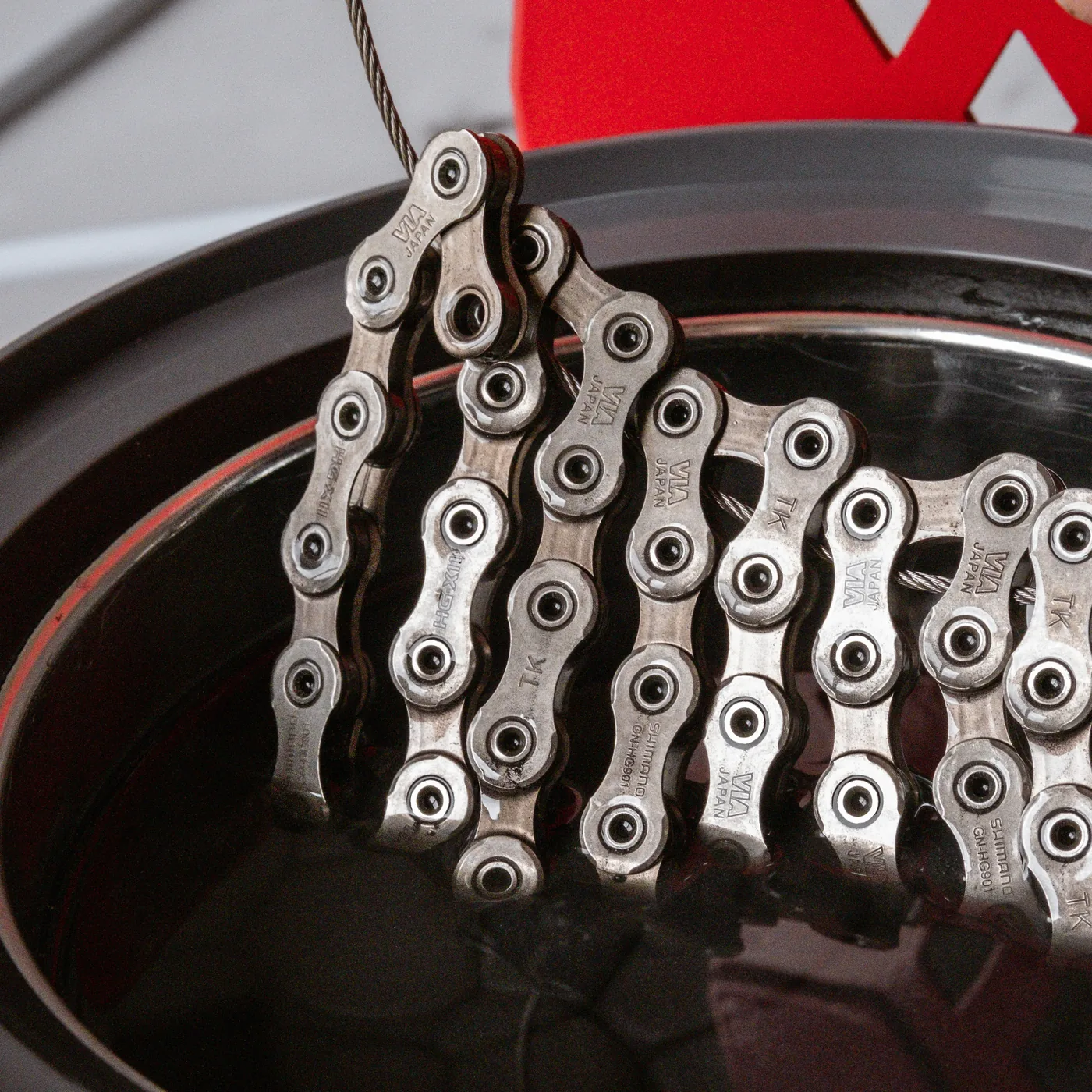
The waxed routine is this. Wipe the chain. Drop it in the pot. Take it out. That's the whole job, and it happens every 300 to 500 kilometres rather than after every wet ride. Modern chip products deal with the factory grease too, so you're not stood over a tray of solvent just to get started.
For a rider with eight hours a week, that's not a small thing. Every hour you're not maintaining a bike is an hour you can ride it, or an hour you can hand back to the people who tolerate your riding. Marginal gains usually get sold as speed, but this one mostly buys back time, and time is the thing you're actually short of.
Where I've proved it
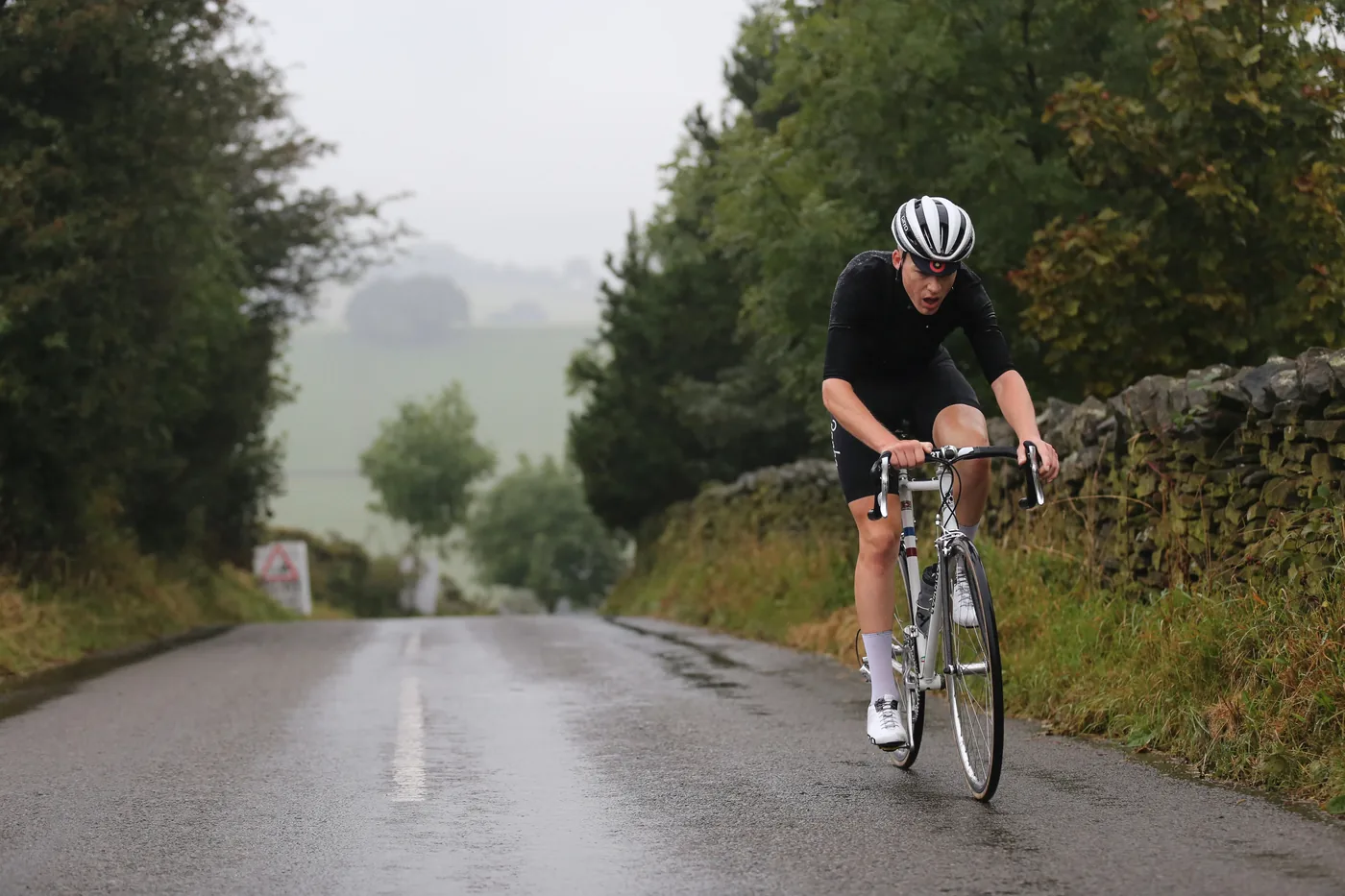
Manchester to London, 2016. Complete washout. Six hours of it on my own, in the kind of rain that finds its way into your shoes inside twenty minutes. Waxed chain, and it was still running clean at the end of a day that would have turned an oiled one into grinding paste.
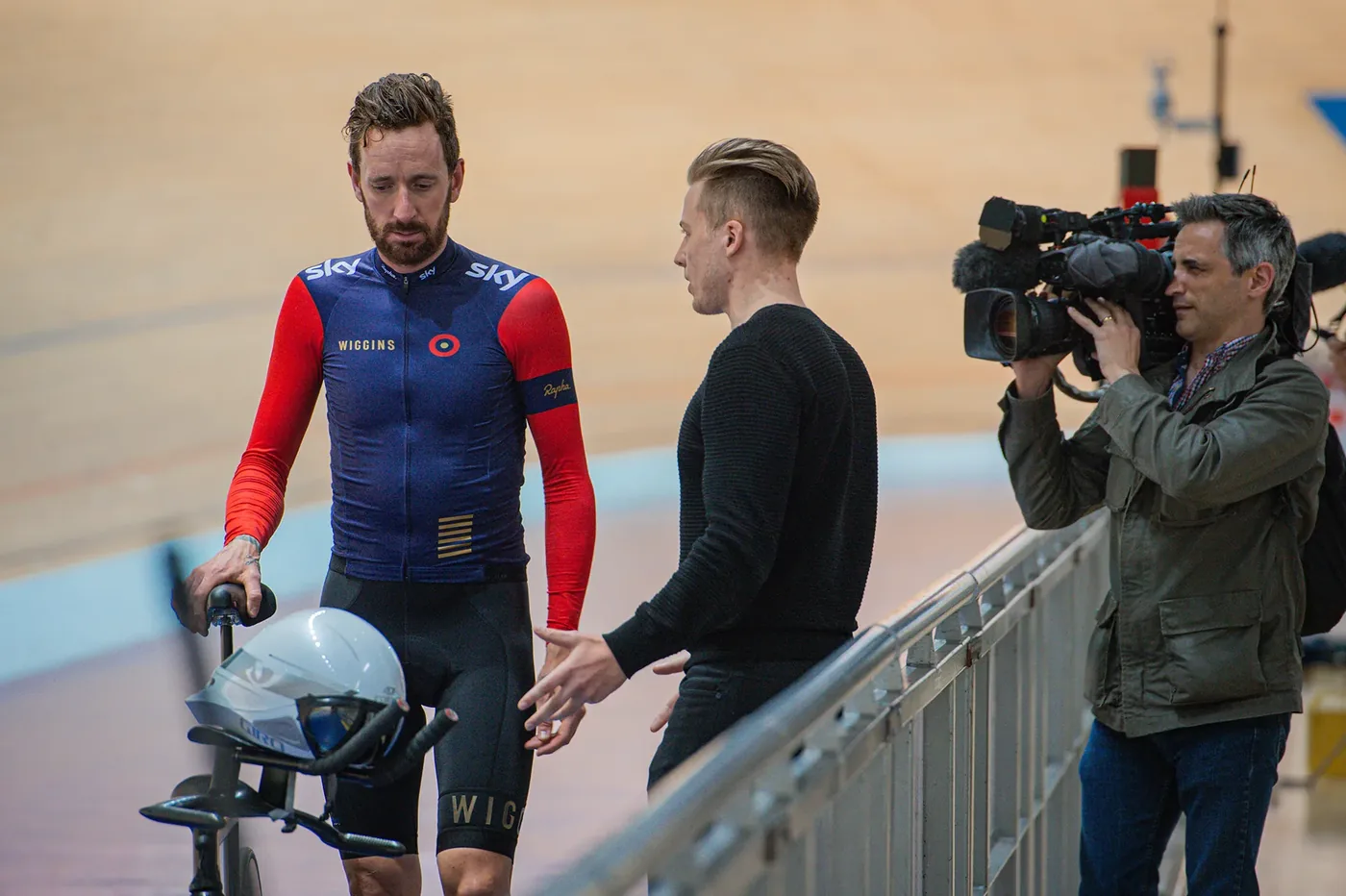
Manchester to London, 2017. Course record, 11:43:10. That was the year I was also working on the broadcast of Sir Bradley Wiggins' Hour Record, which is probably where most of this thinking comes from. Nobody at that level hands back three watts because cleaning a chain is a habit.
Manchester to London, 2022. My fastest time on the route, on the full system, and by then I wasn't thinking about the chain at all.
And Sa Calobra, 29:53, on a waxed chain, seven seconds inside a target that had already beaten me twice. I'm not going to claim the wax bought me those seven seconds. I'll just point out that I wouldn't have had them to spend if I'd given eighteen away at the bottom.
The honest caveats
Two things you should know about me before you take any of this as gospel.
First, I spent a decade inside professional cycling as a creative director at Sky Sports and Team Sky. My instincts on marginal gains were formed in a room where this stuff was basically religion, and that's a bias as much as it is an education. (Yes, I've heard all the jokes about the mattresses. One or two of them are mine.)
Second, I'm a SILCA ambassador. The products I've named are the ones I use, and I'd tell you if they'd let me down, but you're entitled to weigh the disclosure. Every number above comes from an independent laboratory rather than a brand's marketing deck, and I've named the sources so you can go and argue with them instead of me.
The real argument against waxing is the setup cost and the batching, not the performance, and both of those are fair. If you own one bike, ride two hours a week, and the chain lives on a turbo in a spare room, oil is fine, and you should spend the £189 on something that'll make more difference to you than eighteen seconds up a climb you're not riding. Buy the fan.
Most of marginal gains is just refusing to hand back the free stuff.
The actual doctrine
What a decade around this actually taught me isn't really about chains.
The wax is just what happened when I decided, once, to stop accepting a default. The default is oil because your first bike shop used oil. The default is 100psi because that's what the sidewall says. The default is training on feel because that's what everyone at the club does. Nobody tested any of them for you. They just stuck.
The riders who get faster tend to be the ones who go through those defaults one at a time and keep whatever's still standing afterwards. Three watts here, ten watts in your tyres, an hour of sleep, forty grams of carbohydrate before you feel like you need them. Deep wheels come a long way down that list, whatever the marketing says. I might have the order of it wrong, mind you.
So which default are you auditing first? Mine was the chain, mostly because it was the cheapest thing to be wrong about. The bloke with the toothbrush is still on 100psi, and still beats me to the village sign. Sod's law.
Why this is here
This is the doctrine Forma is built on. The app reads the wind before you roll out, tells you where today's gains actually are, and stops you spending £2,000 on wheels when the answer is your tyre pressure and your bedtime. One hundred founding riders, then the doors close.